خلال المراحل المعقدة لإنتاج وتخزين ونقل المساحيق الكيميائية عبر الحدود، تُعدّ حاويات التعبئة المرنة الوسيطة (FIBCs) الإطار الأمثل والأكثر فعالية من حيث التكلفة لتعبئة المواد السائبة في سلاسل التوريد الحديثة. مع ذلك، غالبًا ما يُساء فهم هذه المرحلة من التعبئة ويُغفل عنها من قِبل فرق المشتريات. تختلف المساحيق الكيميائية اختلافًا جوهريًا عن المواد الصناعية القياسية أو المنتجات الزراعية. فهي تتميز عادةً بصغر حجم جزيئاتها، وميلها الشديد لتوليد الغبار في الهواء، وحساسيتها الشديدة للتلف الكيميائي الناتج عن الرطوبة. علاوة على ذلك، تتميز العديد من المساحيق الكيميائية الدقيقة بتفاعليتها العالية، إذ تمتلك خصائص قابلة للاشتعال أو الانفجار عند تعرضها للاحتكاك. إن محاولة تعبئة هذه المواد شديدة الحساسية والتقلب في أكياس منسوجة تقليدية جاهزة للاستخدام تُعدّ خطأً تشغيليًا فادحًا يُؤدي حتمًا إلى الفشل. فالأكياس السائبة القياسية تتسرب عادةً عند ملئها، كما أنها عُرضة للتلف الهيكلي أثناء النقل. لا يتسبب هذا الفشل المنهجي في التعبئة والتغليف في خسائر كبيرة في المواد الخام عالية القيمة فحسب، بل يؤدي أيضًا إلى تلوث بيئي شديد، وعقوبات تنظيمية، ومخاطر سلامة كارثية داخل مصنع المعالجة.
لماذا تفشل أكياس التعبئة الصناعية القياسية فشلاً ذريعاً في عمليات المساحيق؟
بدافع محاولة خاطئة لتقليل تكاليف الشراء الأولية، تستخدم العديد من الشركات أكياسًا سائبة قياسية غير متخصصة لتعبئة مساحيق كيميائية دقيقة، مثل ثاني أكسيد التيتانيوم فائق النقاء، والكربون الأسود الموصل، وكربونات الكالسيوم النانوية، وبودرة التلك، ومساحيق المعادن التفاعلية. والنتيجة الحتمية لهذا التباين هي سلسلة من الأعطال التشغيلية المتكررة والمتوقعة والمدمرة للغاية. ببساطة، لا تتوافق السلامة الهيكلية وخصائص المواد المستخدمة في الأكياس السائبة القياسية مع ديناميكيات السوائل المجهرية للمواد الجسيمية فائقة الدقة. فهي مصممة خصيصًا للمواد الحبيبية أو الكتلية؛ لذا فإن الترقية إلى أكياس سائبة مخصصة ومحكمة الإغلاق للمساحيق الكيميائية ليست مجرد رفاهية تشغيلية، بل ضرورة هيكلية مُلحة.
يتجلى العرض الرئيسي لهذا الخلل في تسرب الغبار بشكل كبير. توفر الفجوات الفيزيائية المتأصلة في أقمشة البولي بروبيلين المنسوجة القياسية، بالإضافة إلى ثقوب الإبر المتضخمة الناتجة عن عملية الخياطة الصناعية، مسارًا سهلًا لتسرب المساحيق الدقيقة. وتحت تأثير الإجهاد الفيزيائي الديناميكي والاهتزاز والتمدد الناتج عن حمولة تزن طنًا واحدًا أثناء مناورة الرافعات الشوكية أو الشحن البحري، تتسع هذه الفجوات الهيكلية المجهرية بشكل ملحوظ. تتسرب المساحيق التي يقل حجم جسيماتها عن 300 مش بسهولة، مما يلوث بيئة الورشة بشكل كبير ويعرض صحة الجهاز التنفسي للعاملين في المنشأة للخطر المباشر.
علاوة على ذلك، تعاني الأكياس العادية من امتصاص شديد للرطوبة. وبسبب افتقارها لآلية إحكام إغلاق مخصصة، تتعرض المواد الخام المعبأة باستمرار لتقلبات الرطوبة المحيطة، مما يؤدي إلى تدهورها بفعل الرطوبة، الأمر الذي يُغير بشكل جذري التفاعل الكيميائي ويُفسد جودة المنتج النهائي. مع ذلك، يكمن الخطر الأكبر في التفريغ الكهروستاتيكي. فعندما تحتك جزيئات المسحوق الجاف ببعضها البعض وبنسيج البوليمر المنسوج أثناء عمليات التعبئة والتفريغ الهوائية السريعة، فإنها تُولد شحنات كهروستاتيكية كبيرة من خلال الشحن الاحتكاكي. وفي الكيس العادي غير المؤرض، تكون هذه الكهرباء الساكنة عالية الجهد المتراكمة عرضةً بشدة لإحداث انفجارات كارثية للغبار القابل للاشتعال.
| مقاييس الأداء والمخاطر التشغيلية | عبوات FIBC الصناعية القياسية | مسحوق كيميائي متخصص في أكياس FIBC |
|---|
| معدل تسرب المسحوق الناعم (< (500 مش) | 3.5% - 5.0% (تنظيف مستمر للمنشآت) | أقل من 0.05% (آلية مقاومة للغربلة) |
| انتقال بخار الرطوبة (MVTR) | > 15 جم/(م²·24 ساعة) (تكتل المنتج السريع) | < 0.1 جم/(م²·24 ساعة) (مع بطانات حاجزية) |
| المقاومة السطحية الكهروستاتيكية | 10¹² - 10¹⁴ Ω (خطر الانفجار الشديد) | < 10⁷ أوم (تأريض/تبديد آمن) |
الميزات التقنية الرئيسية لأكياس FIBC الكبيرة للمساحيق الكيميائية
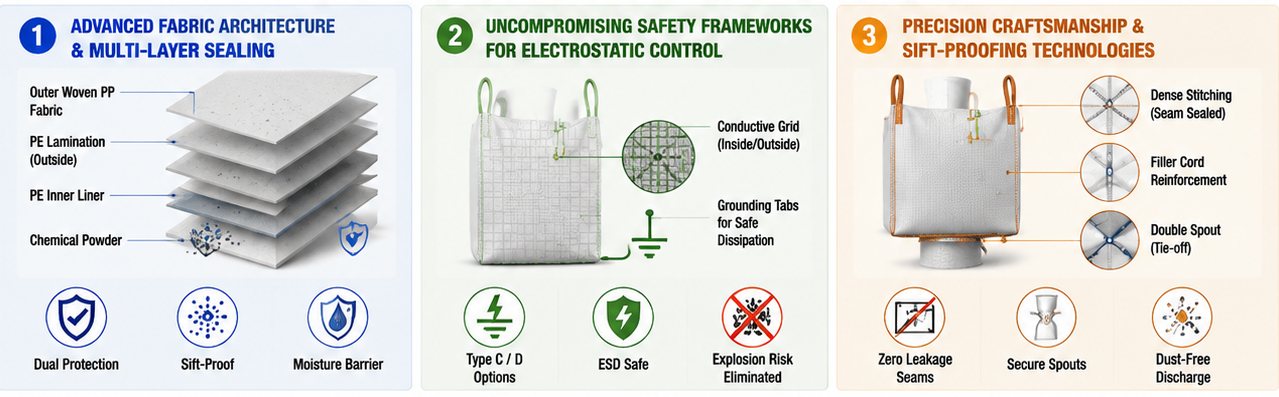
الركائز الأساسية الثلاث لهندسة أكياس FIBC للمساحيق الكيميائية
لإدارة هذه المواد المعقدة بأمان وفعالية، يجب على مديري المصانع وفرق المشتريات تحويل معايير التقييم من التركيز على سعة الوزن الأساسية إلى تقنيات احتواء المواد المتقدمة. عند اختيار حاويات FIBC للمساحيق الكيميائية، يرتكز إطار التقييم على ثلاثة محاور رئيسية.
1. بنية نسيج متطورة وختم متعدد الطبقات: يُعدّ تصميم النسيج بالغ الأهمية؛ إذ يجب أن يتميز بمزيج قوي من التغليف والبطانة الداخلية، مما يُنشئ نظام ختم مزدوج يمنع تسرب المسحوق بشكل فعّال. عند التعامل مع المساحيق الكيميائية، يُعدّ تقييم النسيج بناءً على سمكه أو كثافته (GSM) فقط منهجية خاطئة؛ إذ يجب فحص خصائص الختم المجهرية بدقة متناهية. ينص البروتوكول القياسي المُعتمد عالميًا على استخدام نسيج البولي بروبيلين (PP) عالي الكثافة مع تغليف مزدوج الجوانب من البولي إيثيلين (PE)، مُكمّل بكيس بطانة داخلي من البولي إيثيلين. يُغلق التغليف الخارجي بفعالية الفجوات الموجودة في النسيج، بينما يُحقق كيس البولي إيثيلين الداخلي عزلًا فيزيائيًا كاملًا. بالنسبة للمواد الكيميائية الخام شديدة الاسترطاب أو الوسائط الصيدلانية المتميزة التي لا تتحمل الرطوبة والأكسجين، فإن البولي إيثيلين القياسي غير كافٍ على الإطلاق. في هذه الحالات بالغة الأهمية، يجب على المنشآت الترقية إلى نظام متخصص للغاية. كيس FIBC مغلف برقائق الألومنيوم. يعمل هذا الهيكل المعدني متعدد الطبقات على عزل المادة الداخلية تمامًا عن بخار الماء الخارجي، ونقل الأكسجين، والتدهور الناتج عن الأشعة فوق البنفسجية، مما يضمن استقرارًا كيميائيًا كاملاً أثناء الشحن عبر المحيطات لفترات طويلة.
2. أُطر السلامة الصارمة للتحكم في الشحنات الكهروستاتيكية: بالنسبة للمواد المسحوقة القابلة للاشتعال والانفجار، يُعدّ الحدّ من تراكم الشحنات الكهروستاتيكية شرطًا أساسيًا للسلامة، وهو ما تنص عليه معايير الصناعة العالمية. تتميز مواد مثل الكبريت ومساحيق المعادن القابلة للاحتراق وبعض إضافات الراتنجات الاصطناعية بانخفاض ملحوظ في طاقة الاشتعال الدنيا (MIE). عندما تُولّد الأكياس الكبيرة القياسية شحنة كهربائية احتكاكية من خلال الاحتكاك عالي السرعة، تعمل الشرارة الكهروستاتيكية الناتجة كمصدر رئيسي للاشتعال. وللحدّ من هذا الخطر الجسيم، يجب أن تستخدم المواد الخطرة نظامًا مُصمّمًا هندسيًا بشكل صحيح. كيس FIBC موصل من النوع Cتعتمد هذه العبوة الموصلة المتخصصة على شبكة دقيقة للغاية من خيوط الكربون أو الفضة الموصلة المتشابكة. عند توصيل أطراف التأريض المخصصة بنظام التأريض الخاص بالمنشأة أثناء التعبئة والتفريغ، يتم توجيه الكهرباء الساكنة المتراكمة بأمان وفورًا إلى الأرض، مما يقلل خطر حدوث شرارة إلى الصفر تمامًا.
3. الحرفية الدقيقة وتقنيات منع التسرب: حتى لو كان الحاجز النسيجي الخارجي خاليًا من العيوب التقنية، فإن عمليات التصنيع غير الكافية أو المتسرعة ستؤدي حتمًا إلى تسرب شديد للمسحوق عند اللحامات الهيكلية. تتطلب الحرفية المتخصصة اللازمة لحاويات المساحيق الكيميائية المرنة ذات الأغشية المثقبة (FIBCs) تباعدًا كثيفًا للغاية بين الغرز للحد من حدوث تسرب من ثقوب الإبر. علاوة على ذلك، يجب خياطة شرائط مطاطية مانعة للتسرب عالية المرونة أو خيوط حشو متصلة متخصصة بشكل استراتيجي في جميع نقاط الوصل الهيكلية الحرجة لسد الفجوات الصغيرة تمامًا. ومن الأمثلة البارزة على هذه الهندسة الهيكلية المتقدمة ما يلي: كيس FIBC أسود كربوني مقاوم للتسربصُمم هذا الجهاز خصيصًا لاحتواء جزيئات مجهرية شديدة السيولة تتصرف كالماء تقريبًا. ويعتمد هذا التصميم الفريد على تقنيات خياطة معقدة على شكل متاهة، وطبقات مزدوجة من اللباد على طول كل درزة لضمان عدم تسرب أي مادة. إضافةً إلى ذلك، زُودت فتحات الدخول والخروج بآليات ربط محكمة أو تصميمات أنابيب مزدوجة معقدة لتحقيق دورة شحن وتفريغ مغلقة تمامًا وخالية من الغبار.

التطبيقات الصناعية الرئيسية لحاويات المساحيق المتخصصة ذات الأغشية المرنة
المصفوفة الاستراتيجية: مواءمة خصائص المسحوق مع مواصفات التعبئة والتغليف
يتطلب التعامل مع بيئة التعبئة والتغليف المتخصصة والمعقدة اتباع منهجية دقيقة لضمان توافق الخصائص الكيميائية والفيزيائية المميزة للمسحوق المحدد تمامًا مع القدرات الهيكلية للكيس. إن الاعتماد على التخمين أو المواصفات القياسية القديمة سيؤدي سريعًا إلى إهدار جميع مزايا السلامة المرجوة.
| ملف تعريف المواد الكيميائية | تحديات هندسية محددة | تكوين FIBC الإلزامي |
|---|
| مساحيق كيميائية دقيقة عامة | احتمالية عالية لتوليد الغبار؛ مخاطر متوسطة لفقدان المنتج أثناء النقل. | استخدم نسيج البولي بروبيلين المصفح السميك مع بطانة داخلية محكمة الإغلاق من البولي إيثيلين لمنع تراكم الغبار الهيكلي. |
| مساحيق قابلة للاشتعال/الانفجار | طاقة اشتعال دنيا منخفضة (MIE)؛ خطر انفجار هائل ناتج عن الاحتكاك غير المؤرض. | يجب استخدام شبكات موصلة من النوع C أو أقمشة تبديدية من النوع D مع بطانات مضادة للكهرباء الساكنة. |
| المواد المسترطبة / المواد المائعة | يمتص الرطوبة الجوية بقوة، مما يؤدي إلى تكتل شديد وتلف التفاعل. | يتطلب الأمر رقائق معدنية حاجزية متعددة الطبقات مقترنة بأغشية داخلية سميكة للغاية ومقاومة للرطوبة. |
| مساحيق نانوية عالية السيولة | الجسيمات دقيقة للغاية لدرجة أنها تتصرف كسائل؛ خطر التلوث شديد في حالة التسرب. | يُشترط استخدام درزات محكمة الإغلاق تمامًا مع حبال حشو متصلة وفوهات تصريف على شكل متاهة. |
من خلال تطبيق بروتوكول المطابقة الموحد هذا بدقة، تستطيع فرق المشتريات والهندسة القضاء على الغالبية العظمى من الاضطرابات التشغيلية المتعلقة بالتعبئة والتغليف. في بيئة صناعة الكيماويات الحديثة الصارمة والخاضعة لرقابة مشددة، تُعدّ أكياس التعبئة المرنة (FIBC) خط الدفاع الأول لضمان سلامة الإنتاج، والامتثال البيئي الصارم، وجودة المنتج العالية. تُسهم أكياس التعبئة المتخصصة والمصممة بعناية فائقة في تقليل انكماش المواد الخام بشكل كبير، وتقلل بشكل ملحوظ من مخاطر العقوبات البيئية الباهظة من الهيئات التنظيمية، وتتجنب الحوادث الكارثية في المنشأة، وتحسن بشكل كبير كفاءة التحميل الميكانيكي. عند تقييمها بدقة من منظور التكلفة الإجمالية للملكية (TCO)، يُعدّ الاستثمار الاستراتيجي في بنية التعبئة والتغليف المتخصصة والمناسبة القرار التشغيلي الأكثر منطقية وربحية الذي يمكن للمنشأة اتخاذه. يُمثل تحديث أكياس التعبئة نقلة نوعية تُساهم بشكل مباشر في استقرار سلسلة توريد المواد الكيميائية بأكملها.